
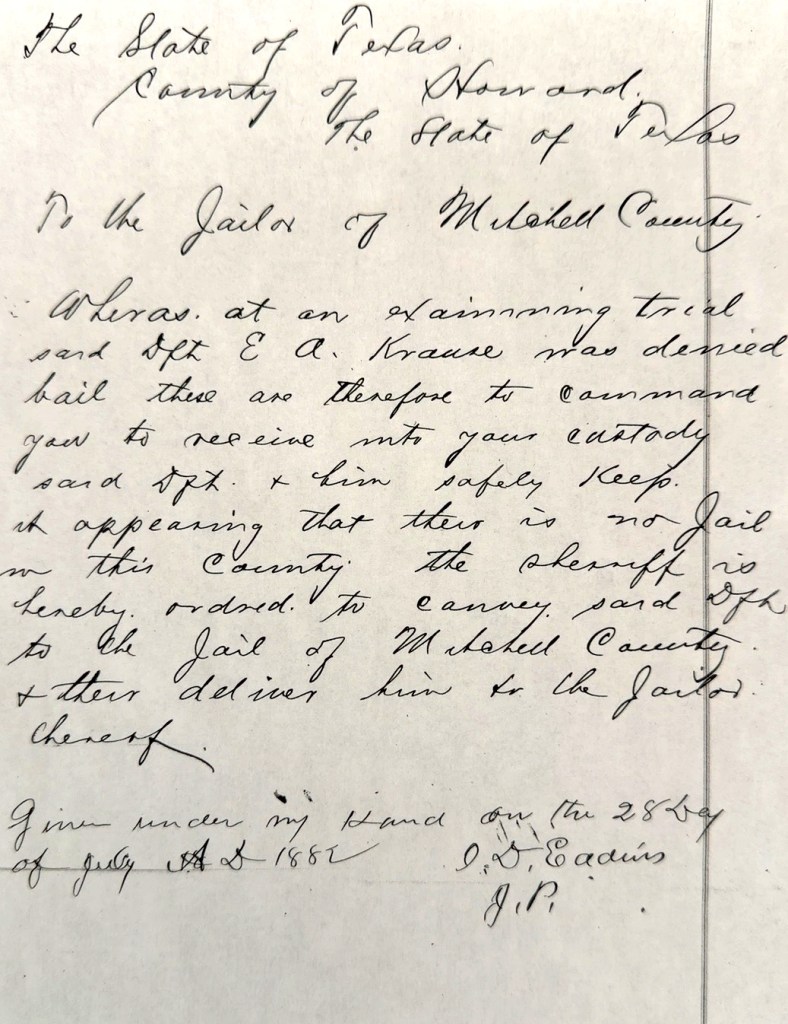
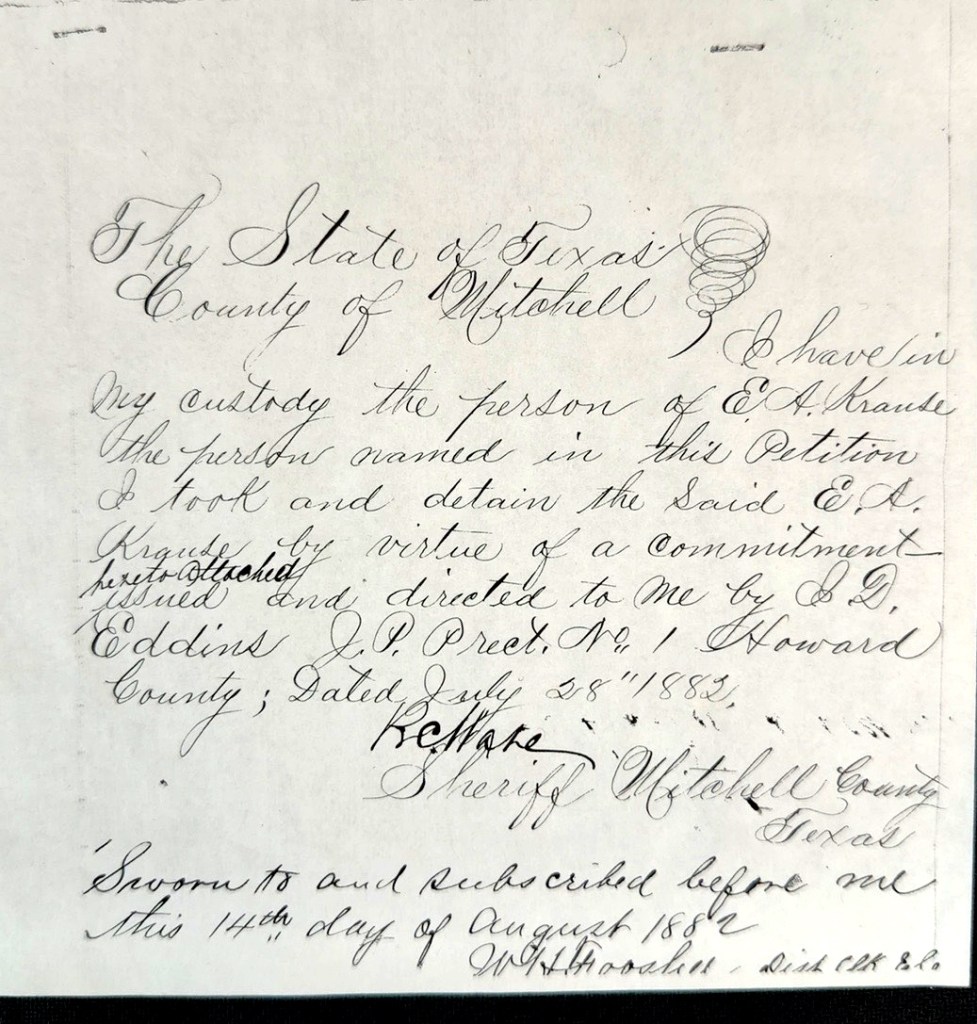
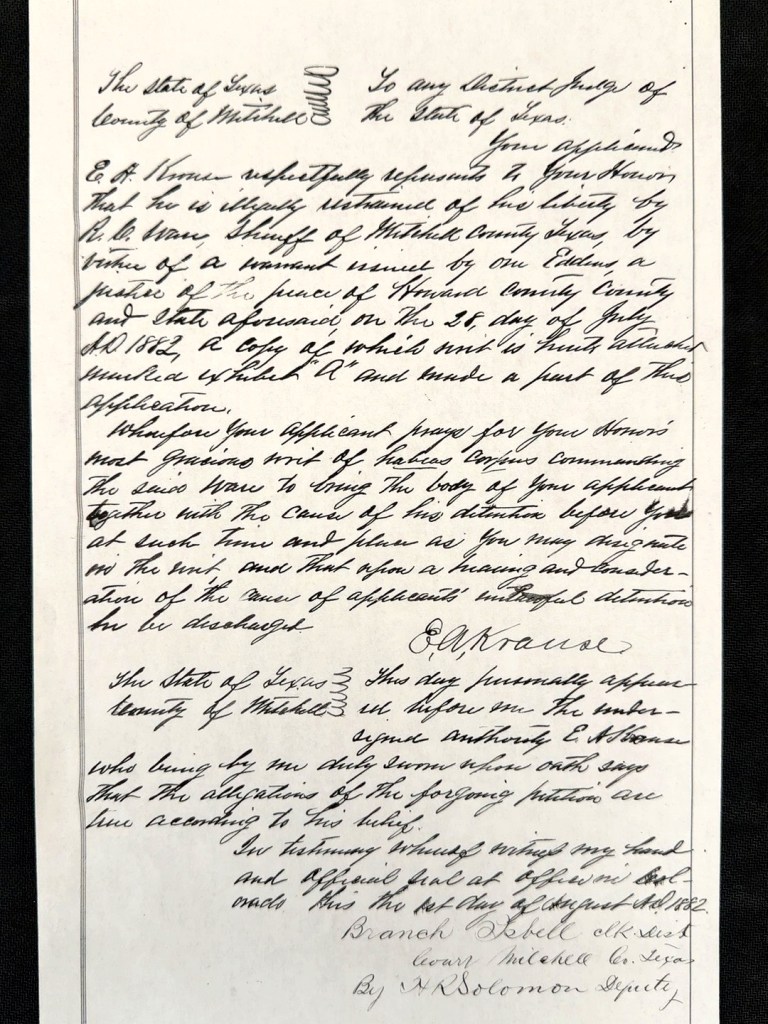
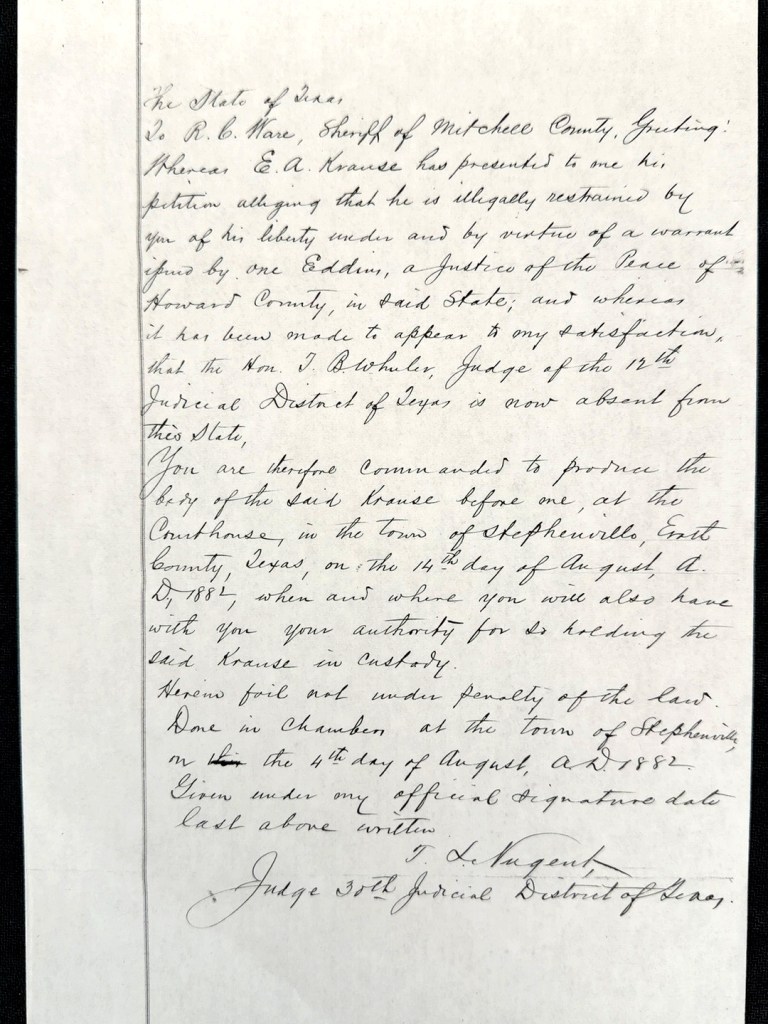
Copy of an order issued August 4, 1882, by T. L. Nugent, Judge of the 30th Judicial District of Texas, in response to E. A. Krause’s petition for a writ of habeas corpus. Judge Nugent directed the sheriff of Mitchell County to bring Krause before him at the courthouse in Stephenville, Erath County, on August 14, 1882, for a hearing concerning his detention.
The following documents and newspaper accounts accompany Big Spring’s First Recorded Murder: Payne Holt, Part Two murder story. They include surviving court records concerning E. A. Krause, the man accused of Holt’s murder, along with historical newspaper reports that shed additional light on Krause’s position in the community.
These materials are presented to document the research behind the article. Where the meaning or relationship of a document remains uncertain, that uncertainty is identified.
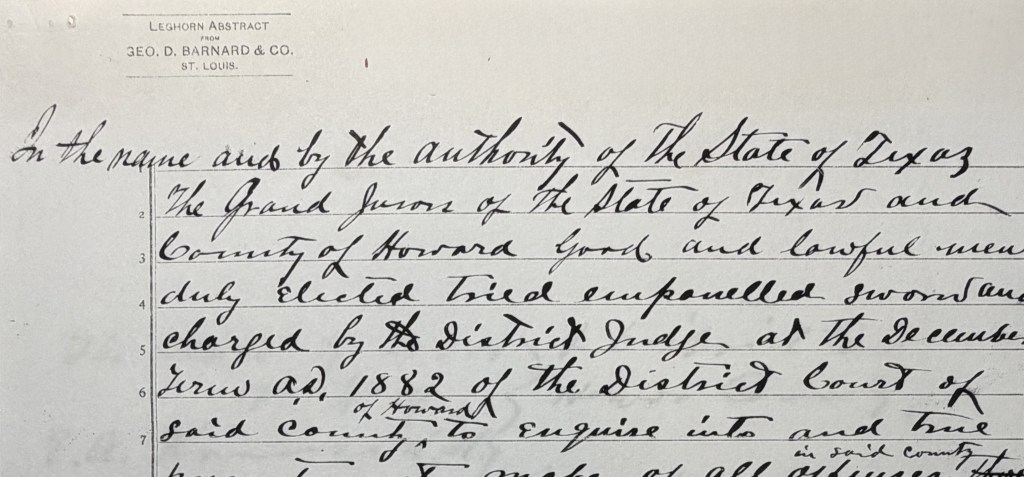
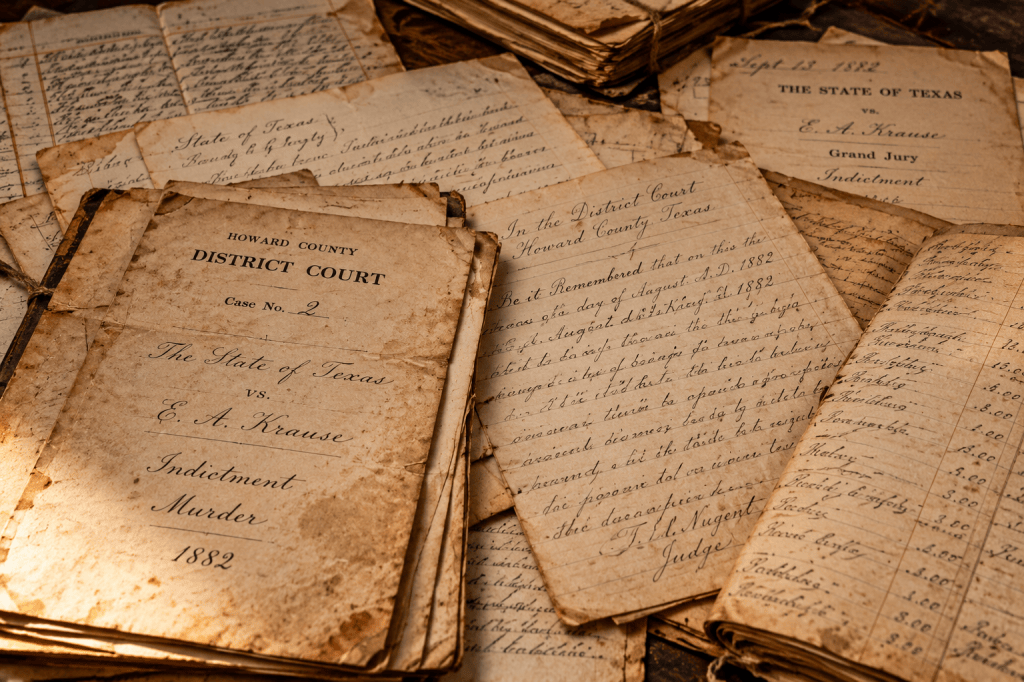
Glimpse at the December 1882 grand jury indictment, State of Texas v. E.A.Krause, Howard County District Court, Case No. 2.
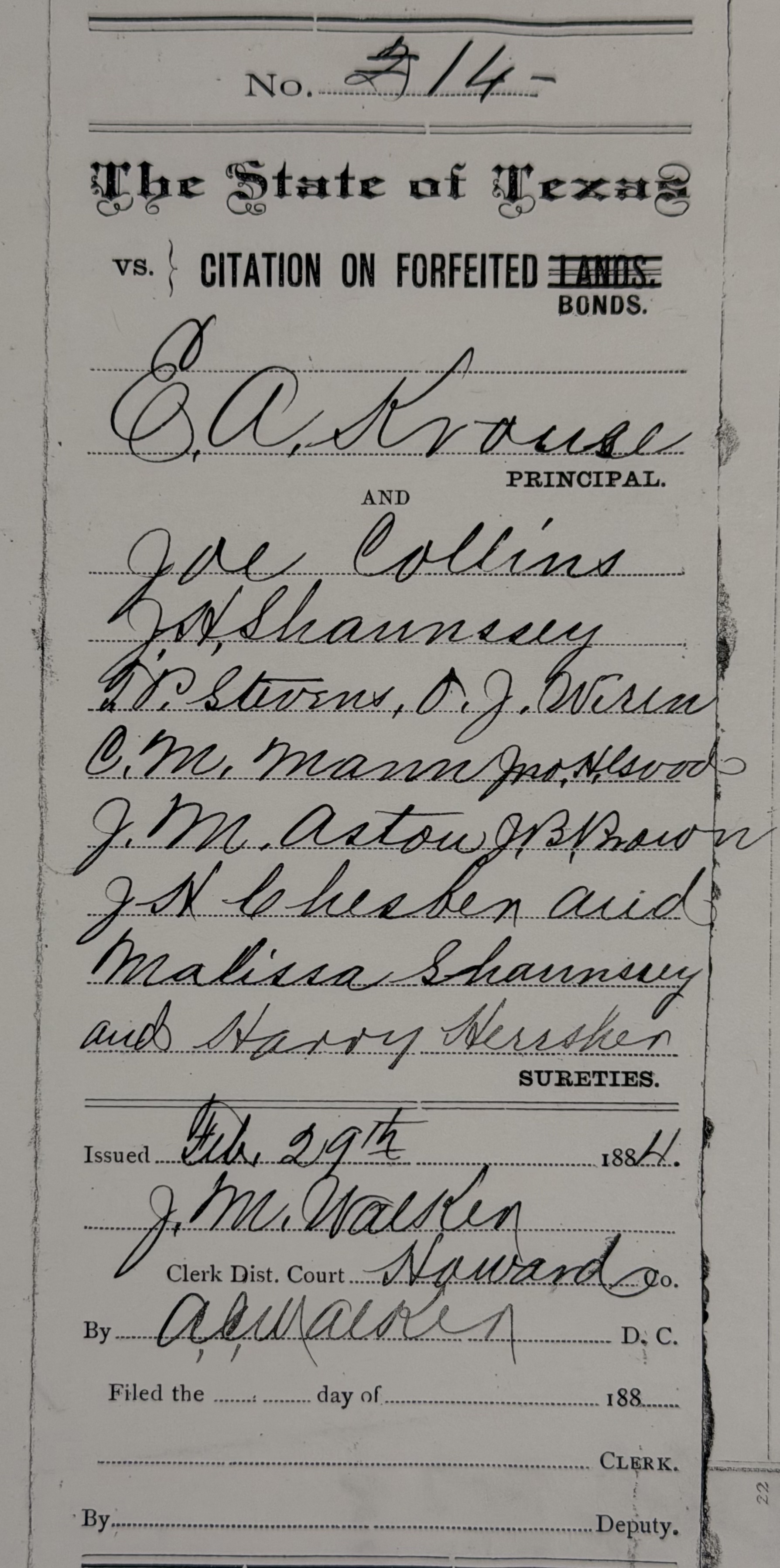
Citation on Forfeited Bonds, issued February 29, 1884, naming E. A. Krause and his sureties. This court document records proceedings concerning the forfeiture of Krause’s bond following his release in the Payne Holt murder case. Copy of handwritten court records, Howard County District Court.
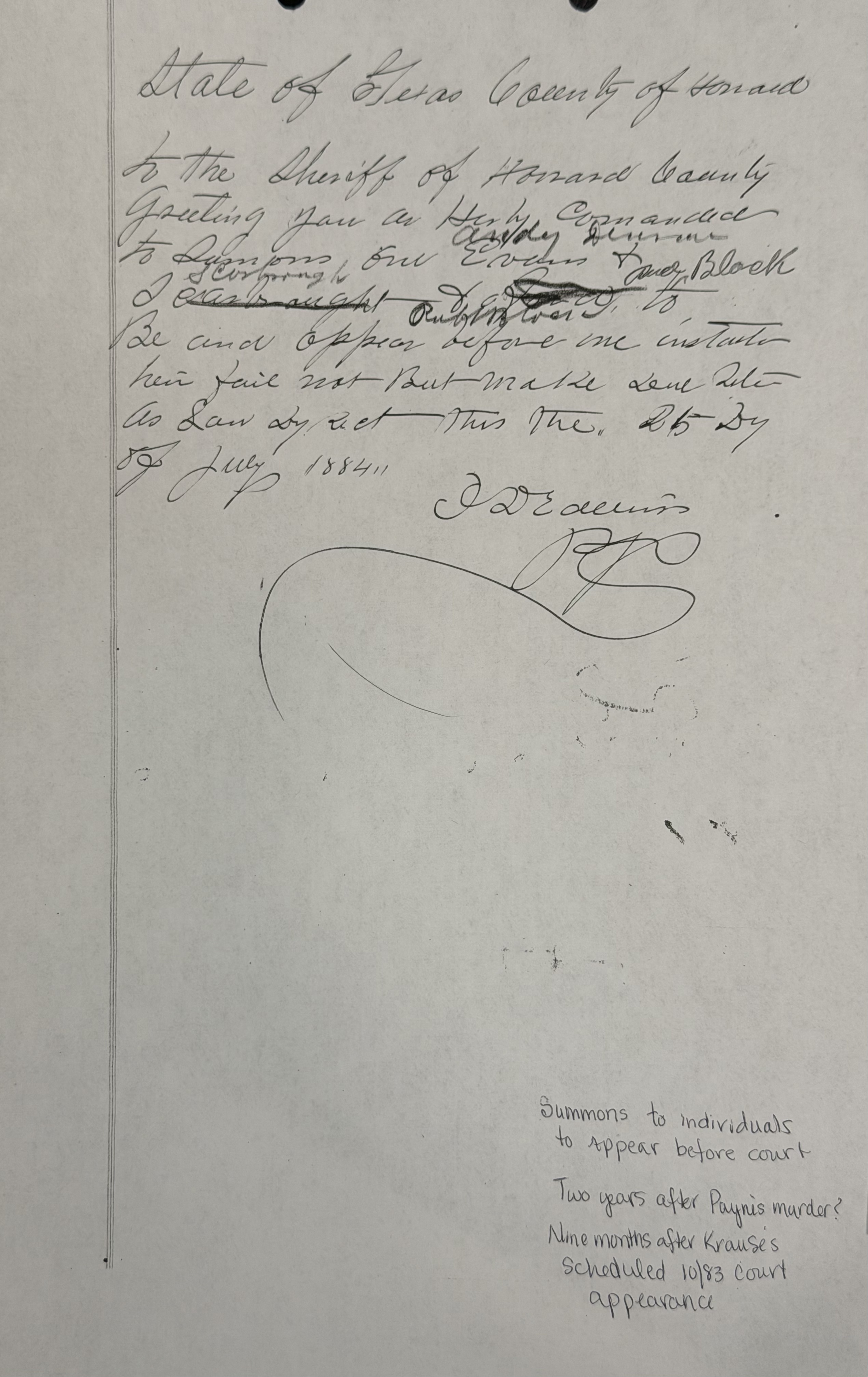
Court Summons, 1884. A summons directing named individuals to appear before the Howard County District Court, approximately two years after Payne Holt’s murder and nine months after E. A. Krause’s scheduled October 1883 court appearance. The document raises questions about whether legal proceedings continued following Krause’s failure to appear. Its precise connection to the murder case has not yet been established. Photograph of a copy of the original handwritten court record. Researcher’s notes appear in the lower right corner of the photograph and are not part of the original court document.
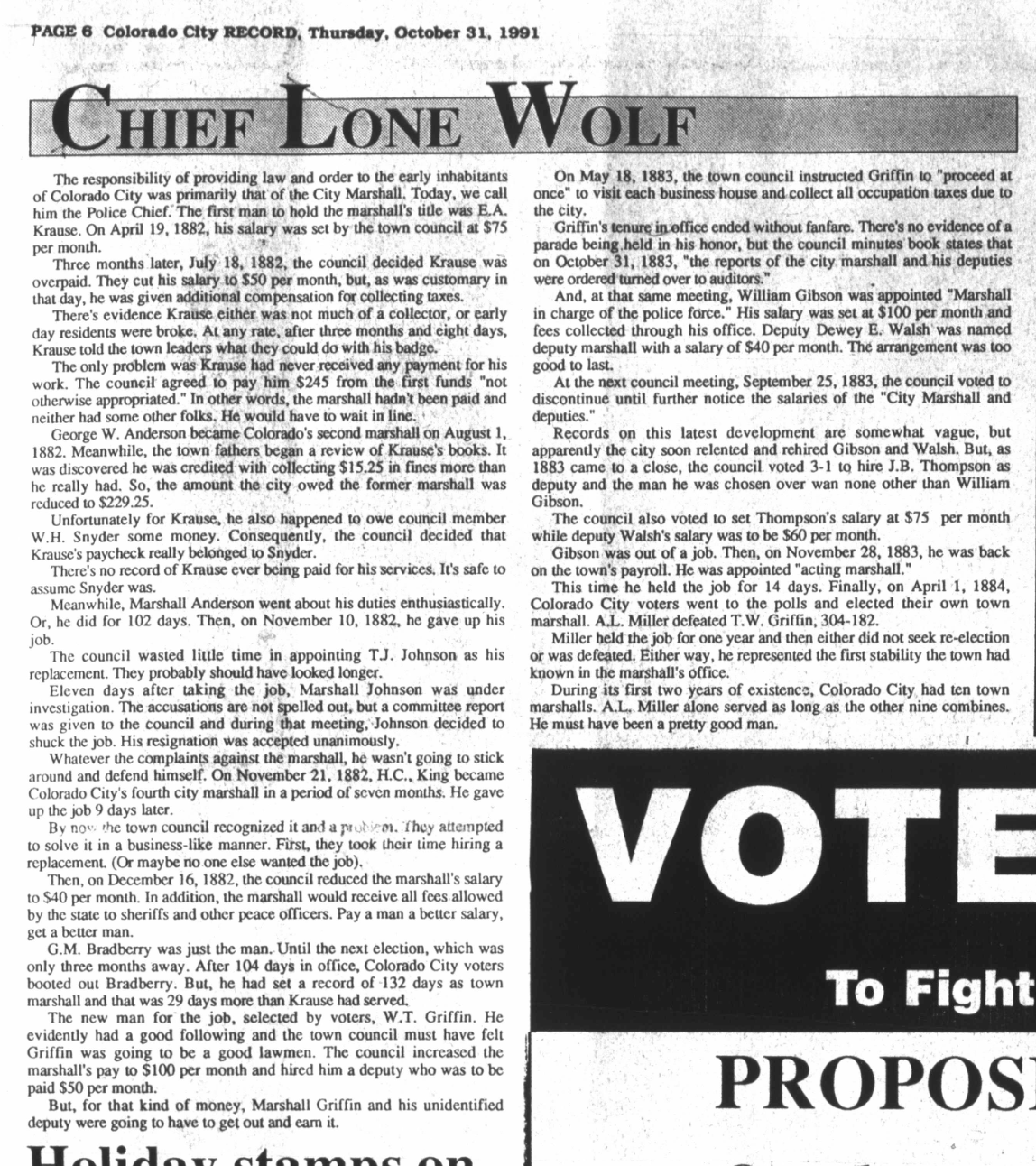
“Chief Lone Wolf,” Colorado City Record, October 31, 1991, p. 6. Historical newspaper article identifying E. A. Krause as Colorado City’s first city marshal. The article reports that the town council established his salary at $75 per month on April 19, 1882, and that George W. Anderson succeeded him on August 1, 1882, just days after Payne Holt’s death.
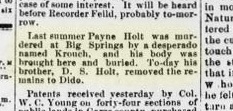
Removal of Payne Holt’s Remains, March 9, 1883. The Daily Democrat. Newspaper report describing the removal of Payne Holt’s remains from Big Spring by his brother for reburial in Dido, Texas. This contemporary account helps document Holt’s final resting place following his death in July 1882.
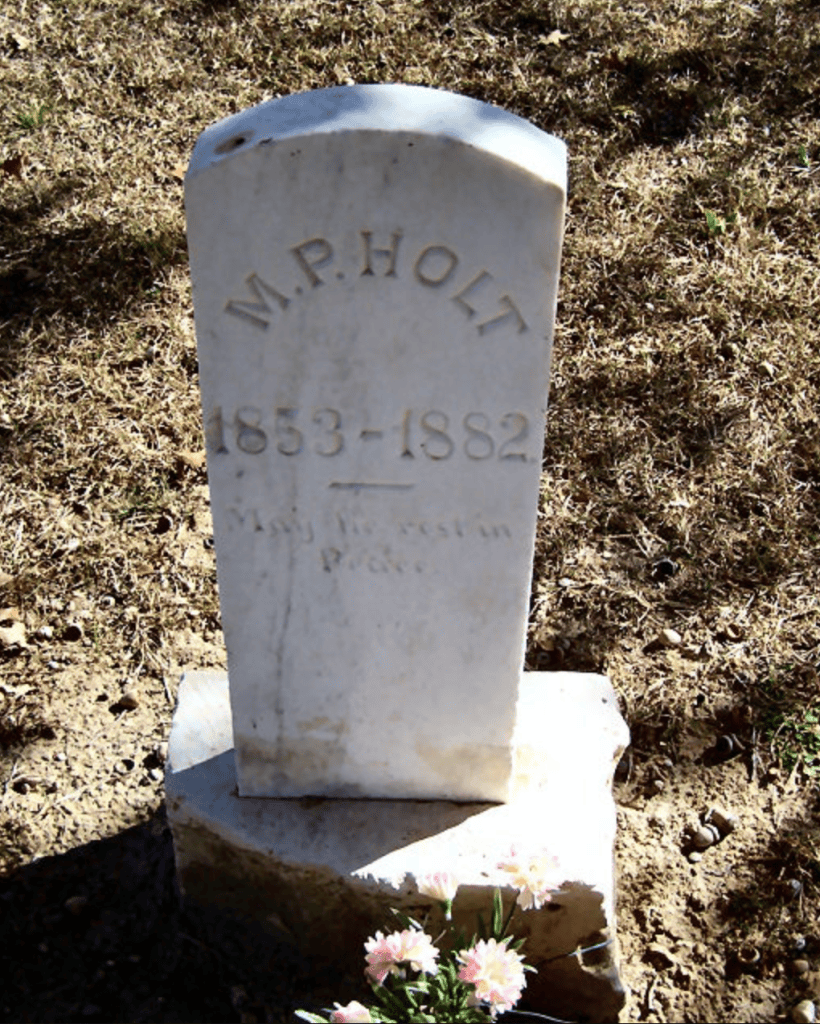
Gravestone of M. Payne Holt (1853-1882), DIdo Cemetery, Tarrant County, Texas. Photograph via Find a Grave.



Leave a Reply