
We hear a lot about Joseph and William Fisher’s store in early Big Spring, but did you know there was also a grocery store operated by a man named Ike Gronsky?
In 1885, Ike Gronsky ran a grocery store on Clinton Street, now Main Street, that also housed the town’s post office!
I stumbled across his store while researching an 1885 murder. In the court records was a hand-drawn map identifying Gronsky’s Store, the Crystal Palace Saloon, and the Eureka Saloon.
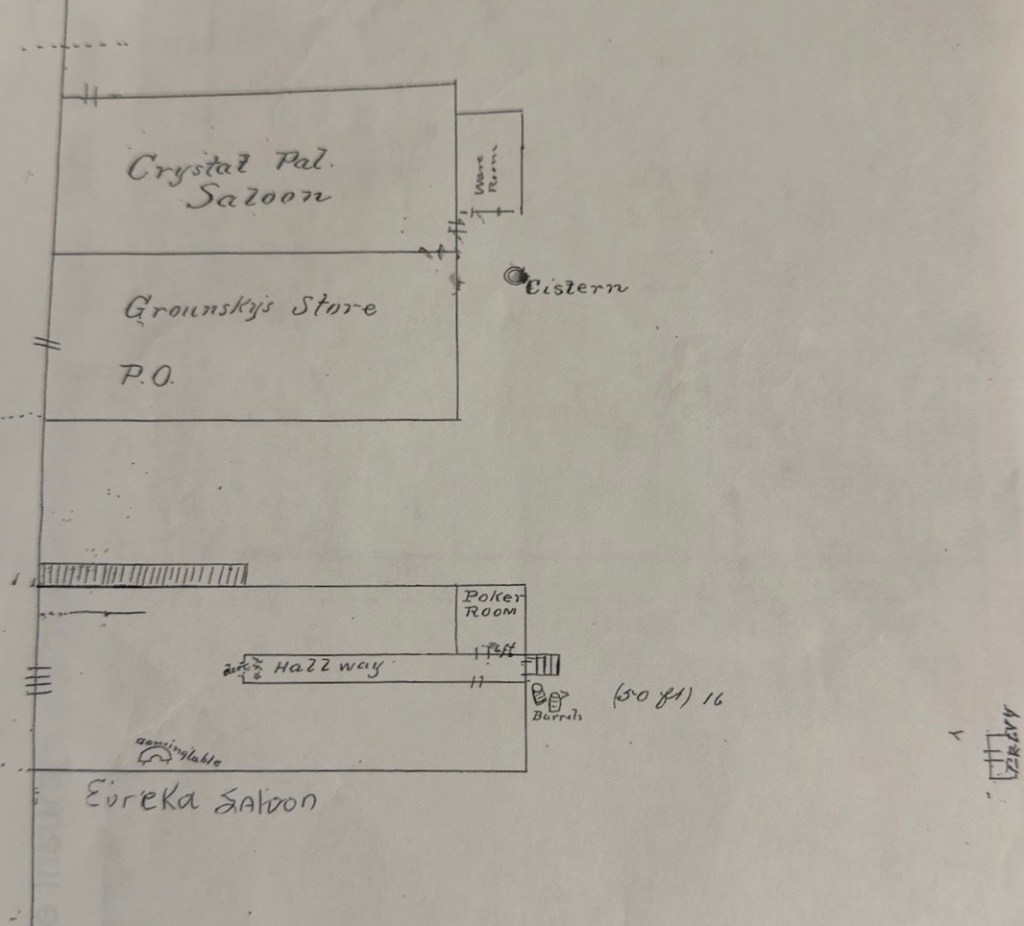
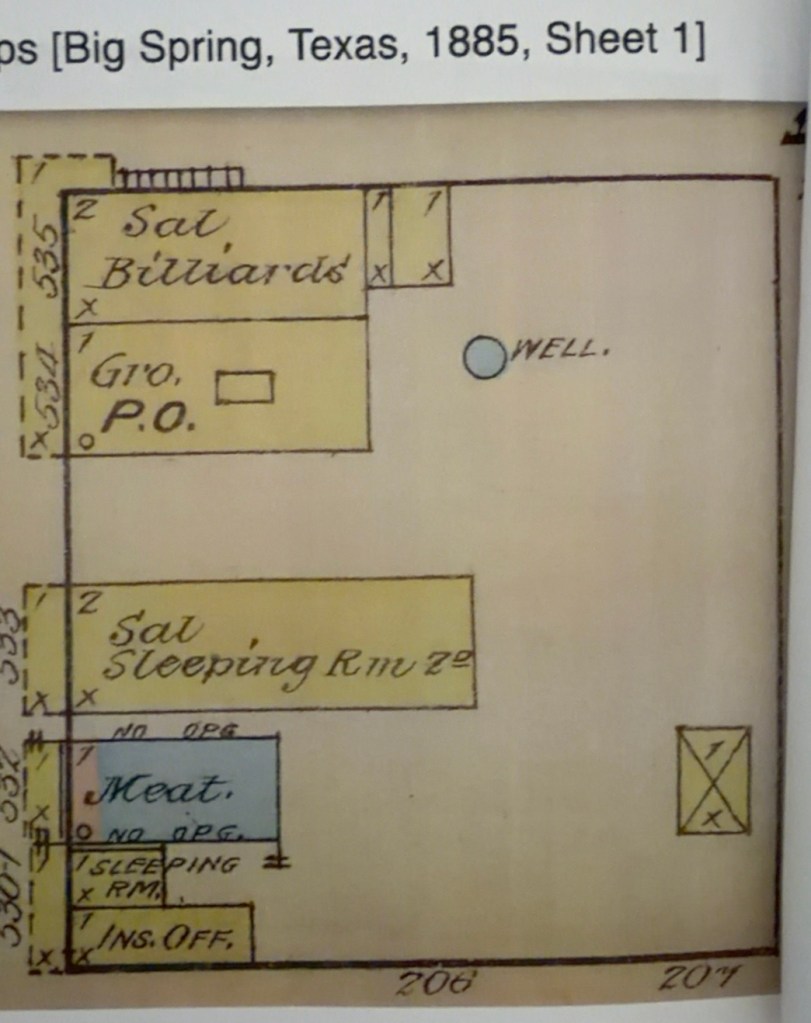
When I compared the drawing to an 1885 Sanborn fire insurance map, the buildings lined up almost perfectly! Both maps even showed a water source behind the grocery, identified as a cistern on one and a well on the other.
But here’s another interesting discovery!
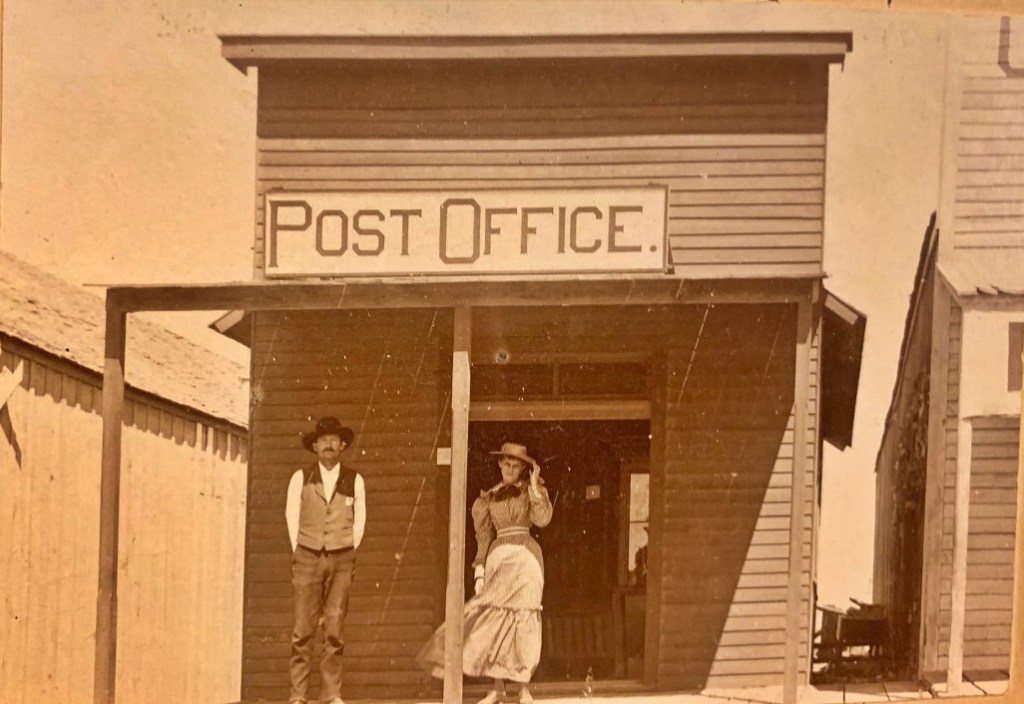
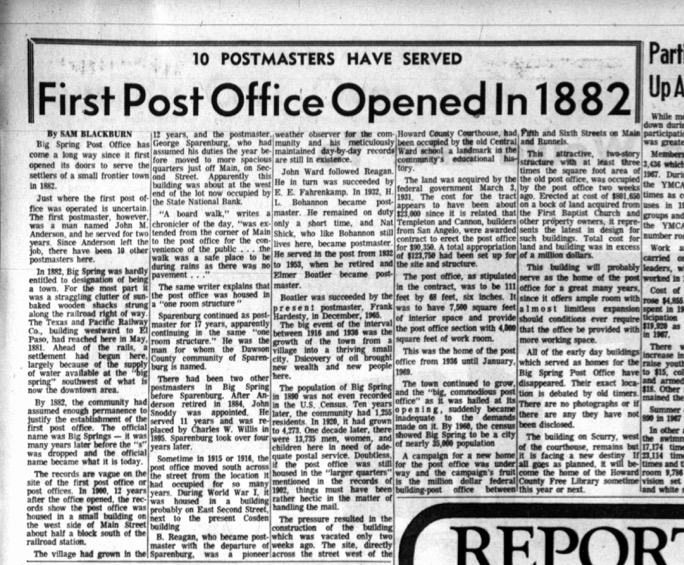
A photograph in the Heritage Museum collection identifies Big Spring’s first post office at 100 Main Street, facing east. However, by 1885, the Sanborn fire insurance map shows a post office on the opposite side of Main Street, facing west, inside Gronsky’s grocery store. Somewhere along the way, it appears the post office had changed locations!
Ike Gronsky’s name turned up somewhere else.
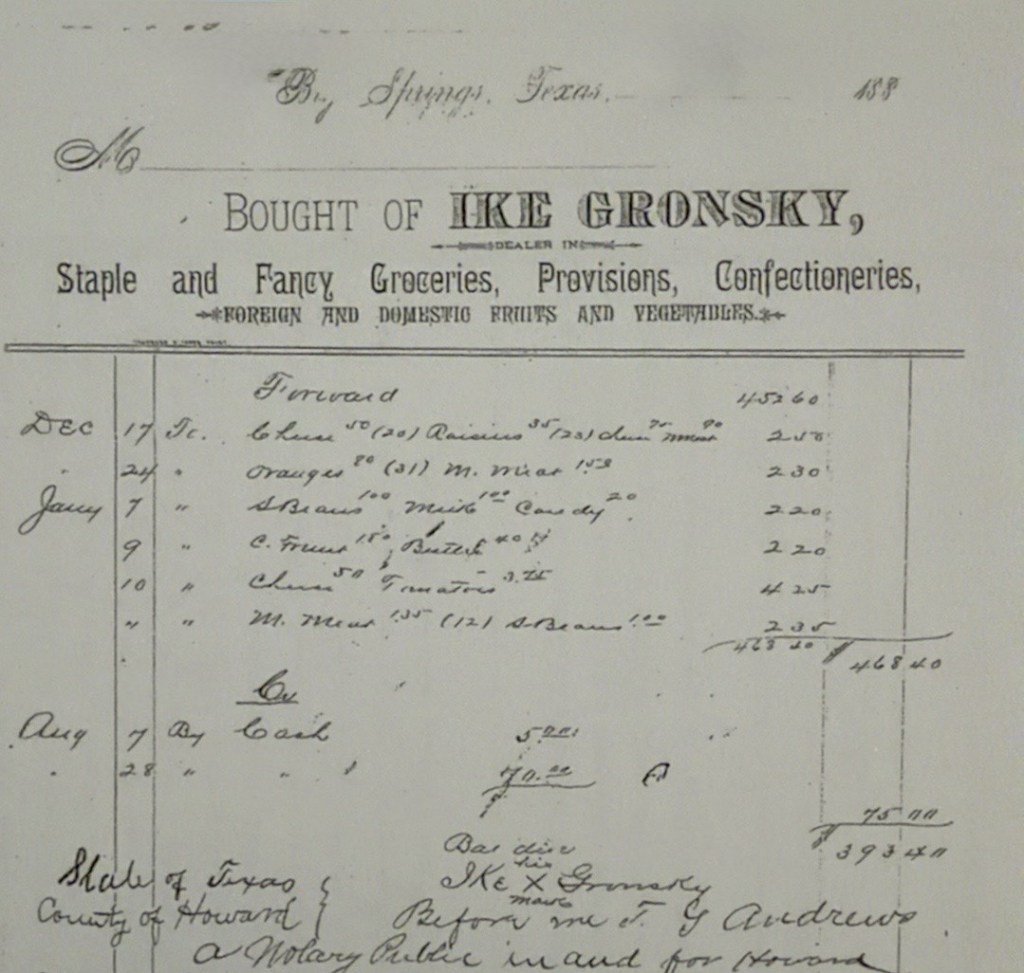
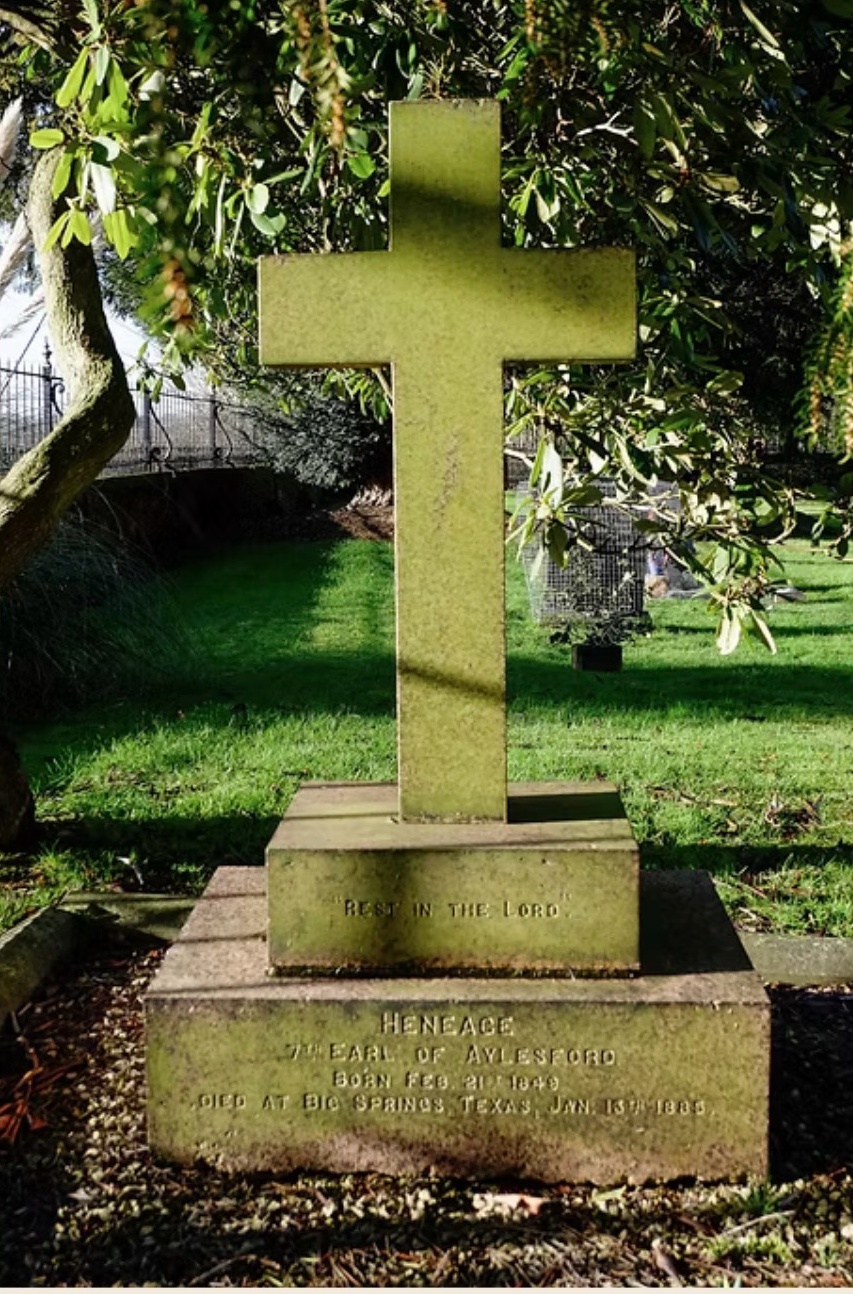
While researching the Earl of Aylesford, I discovered an itemized grocery bill among his probate records. The Earl’s estate owed Ike nearly $400!
At the bottom of that account was one of my favorite little discoveries. Although Ike operated a grocery business in early Big Spring, he apparently couldn’t sign his own name. On the sworn statement, he made his mark with an X.
Another glimpse into Gronsky’s earlier life appeared in a retrospective newspaper article titled Merchants of Yesteryear. The writer recalled that Ike Gronsky had once driven ranchers crazy by leisurely moving sheep across cattle ranges. The article offered no further details, but it leaves me wondering whether Gronsky had been involved in the old tensions between cattlemen and sheepmen before establishing himself as a Big Spring grocer. It seems our mysterious merchant may have had a few stories of his own.
A murder investigation, an English earl, a grocery store, an old post office, and a well that’s no longer visible. All connected through a few pieces of historical evidence.
It’s those little things I find that take someone from being just a name on a page to a person who once lived and worked in our little West Texas town in the 1880s.
Beth Henry, aka Beth of Death



Leave a Reply