
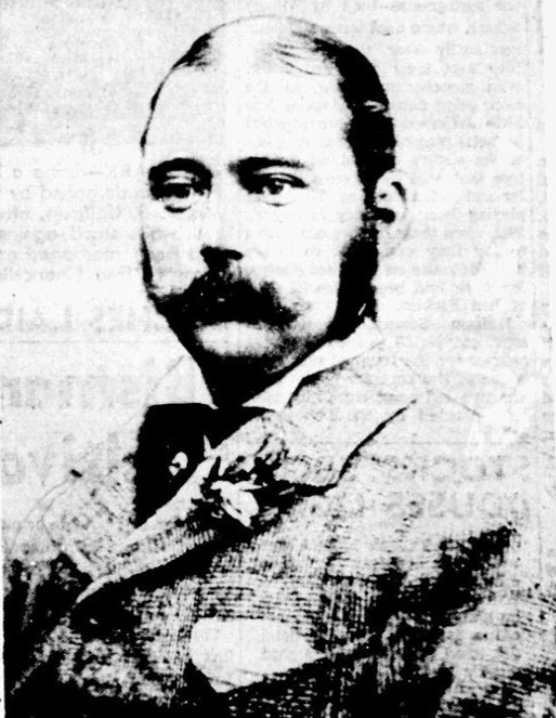
A member of the British aristocracy steps off a train in West Texas.
That could be the beginning of a great story or a bad joke. I suspect, to Joseph Heneage Finch, it was a little bit of both.
Nobody’s story starts in the middle. However, that’s where we often find ourselves when we encounter the 7th Earl of Aylesford.
We could spend hours ruminating and speculating about what brought him to our shores. Was he hoping to restore the family fortune, establish a home for his daughters, or simply escape the scandals of England? Until we find something written in the Earl’s own hand, his reasons remain open for discussion.
In the interest of brevity, and because nobody wants to machete their way through that tangle of possibilities, I’ve decided to concentrate on his marriage. Besides, I love a good scandal, and this one is of soap-opera proportions.
In January 1871, the Earl married Edith Peers-Williams. They had two daughters, Hilda Joanna Gwendoline, born July 25, 1872, and Alexandra Louise Minna, born July 9, 1875.
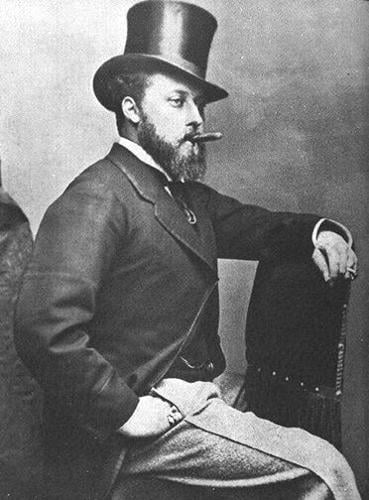
In 1876, while touring India and hunting with the Prince of Wales, the Earl learned of his wife’s intimate relationship with Lord Blandford, Winston Churchill’s uncle. The Prince, later King Edward VII, was affectionately known as Bertie. His other nickname, “Dirty Bertie,” suggests he was no stranger to scandal himself.
Upon learning of his wife’s affair, the Earl sent an urgent telegram to his mother:
“Send for the children and keep them till my return. A great misfortune has happened. Am writing by the mail.”
At the time, Hilda was only three years old, and Alexandra was barely seven months old.
It would be easy to condemn Edith for leaving her husband and two young daughters. But before we judge her too harshly, perhaps we should hear her side of the story.
In a heartbreaking letter to her mother-in-law, Edith wrote:
“I do not attempt to say a word in self-defense; but you can imagine I must have suffered much before I could take such a step.”
She went on to describe her unsuccessful attempts to win her husband’s affection, saying she could no longer bear to live uncared for.
Perhaps the saddest part of her letter concerned her daughters. She begged their grandmother not to teach them to hate their mother, even suggesting that they be allowed to believe she was dead.
Edith wasn’t the only one who questioned her husband’s behavior. An 1885 newspaper account described him as having neglected his wife and treated her in a heartless fashion.
Although local newspapers in Big Spring would later report that the Earl “gave practically no attention to women,” his reputation in England suggested otherwise.
During his divorce proceedings, accounts emerged of nights spent at London’s theaters, music halls, and pleasure gardens, sometimes returning home intoxicated in the early hours of the morning.
Then there was the matter of Mrs. Rosamond Dilke, whose husband, Charles Featherstone Dilke, was a longtime acquaintance of the Earl.
Allegations of an improper relationship between the Earl and Mrs. Dilke caused considerable controversy. Charles Dilke died by suicide in August 1877, and his brother, Major Featherstone Dilke, subsequently accused his sister-in-law of improper conduct, suggesting her relationship with the Earl had contributed to his brother’s distress.
Mrs. Dilke responded by bringing a libel action against him. Both she and the Earl would later deny under oath that they had committed adultery.
Of course, we have only glimpses into a marriage that neither of them lived to explain to us in full. But it seems safe to say there was wrongdoing on both sides.
The Earl sought a divorce from Edith, but the proceedings brought more trouble.
In 1878, the jury found that Edith had committed adultery with Lord Blandford. Unfortunately for the Earl, it also found that he had committed adultery and that he and Blandford had colluded in the divorce proceedings. His petition was dismissed.
The Earl and Edith would remain legally married, although separated, for the rest of his life.
With his marriage in ruins and his private affairs exposed to the public, the Earl eventually turned his attention toward a very different life.
In his memoir, A Glance into the Past, Arthur Sebright recalled his friendship with the Earl, whom he affectionately called “Poor Joe Aylesford.” Sebright described him as a warmhearted man who was often his own worst enemy.
According to Sebright, the Earl had “took it into his head that he would like to buy a ranch out in Texas.”
Sebright also recalled attending a dinner at the Earl’s London home on the evening before his departure for America.
And so, the Earl set his sights on Texas.
Interestingly, Sebright would later offer a different account of what caused the Earl’s death.
But that’s a story for another day.
Beth Henry, aka “Beth of Death”



Leave a Reply